Tech Fleet News - March 2026 - Active Listening


“You cannot truly listen to anyone and do anything else at the same time.”— M. Scott Peck
Hello Tech Fleet Fam!
Misaligned requirements. Missed context. Decisions made on assumptions. A lot of what goes wrong on project teams isn't a process problem, it's a listening problem.
This month’s issue tackles active listening head-on: what it means beyond just "paying attention," where most of us quietly go wrong, and a simple six-step framework to make your team's communication smoother.
📣 Community Updates & Announcements 📣
✨ March Masterclass Openings
- Product Operations Masterclass - March 23rd 2026 2026
- AI-Enabled Product Requirements Masterclass - March 23rd 2026
- Service Leadership Masterclass - March 23rd 2026
- AI-Enabled UX Research Masterclass - March 30th 2026
- Brain Psychology and UI Design Masterclass - March 30th 2026
🚀Upcoming Client Projects
Applications for Phase 1 of our nonprofit client projects opening soon for Project Managers, Product Strategists, UX Researchers, and Agile Coaches to help bring these mission-driven initiatives to life.
- Free Dog Trainers: Design a website with a secured database for lead trainers to manage and assign training plans to volunteers, allowing volunteers to submit session reports for their assigned clients.
- Global EcoVillage Network: This project will launch GEN’s upgraded platform, improve data tools, support regional collaboration, and help identify sustainable services while keeping it a central hub for the global ecovillage network.
🚀 Upcoming Internal Projects
- Tech Fleet - Leadership Development Messaging on the Tech Fleet Website: This project will adjust the Tech Fleet website to clearly show potential members the value we provide: agile service leadership development through practice and collaboration. More details here
- Tech Fleet - Streamlining Hand-Offs & Case Studies: Improving the Hand-off and Case Study System for Tech Fleet Project Work. More details here
🚀 Volunteer Openings
- Program Management Apprenticeship: Advanced apprenticeship under Morgan Denner, focused on learning how to run programs—a blend of UX, service design, product management, and project management. To apply, a video interview is a must (see link below) (audio responses are ok, but video preferred)
📅 Live Projects
Check out all ongoing Tech Fleet projects on the observer dashboard. We welcome everyone in the Tech Fleet community to observe projects (Read this first!). Explore milestones, deliverables, client info, and project resources while observing teams in action.
📚Community Resources
- Teammate Handbook Resource: If you want to get involved in team-based problem solving, this handbook is crucial. It explains the different types of teamwork in our community and shows you exactly how to join in. Every teammate—project trainees, volunteers, and classmates—should read it.
- Story Board Workshop Template: We’re excited to introduce a new resource: Storyboards! Storyboards use visuals to map key points in a process or journey. In our case, they’ll show a potential member’s experience with skills and practice measurements, helping us better understand and improve their journey.
⏰ Community Events
- Tech Fleet Weekly Community Onboarding
- Tech Fleet's Strategy and Roadmap for 2026
- Preview of Masterclasses - coming soon
🙌 Community Shoutout
Celebrating our Program Management Apprentices
Shout-out to Abegail Taitano, Vicky Stephens, Rene Pacha, Veena Sodhani, Aerial Williams, Lexi Talbert, Nathan Lew, Amber An Bo who just completed Tech Fleet’s Advanced Program Management Apprenticeship.
Over the three months of the apprenticeship, they didn’t just observe how programs run — they actively contributed. The team supported strategic planning for internal process improvements, helped identify opportunities to optimize how teams work together, contributed to risk identification and mitigation planning, and facilitated meetings and program updates to keep everyone aligned.
Their work helped strengthen communication across teams and supported thoughtful improvements in how programs operate.
Vicky Stephens captured her experience beautifully: “I .. found it to be a really insightful experience. It gave me a better understanding of what goes on behind the scenes when organizations design and run programs. One of the highlights for me was working on customer experience (CX) mapping. It was interesting to explore the journeys of Tech Fleet users and clients, identify common pain points, and think about ways the experience could be improved. I also got some exposure to the early stages of developing an impact report, which helped me understand how organizations measure and communicate their progress.”
We’re grateful for the curiosity, ownership, and collaboration these apprentices brought to the program!
💭Term of the Month: Active Listening
Active Listening on Project Teams: The Missing Link in Communication
Communication, in layman’s terms, is the transfer of a message from one party to another. However, the chain of communication isn’t truly complete until the receiving party correctly receives and understands the message being passed. How does the speaker know their message has actually landed? This is where active listening comes in.
Active listening is an essential aspect of communication and is arguably one of the most critical, not-so-secret ingredients to successful collaboration and problem-solving on project teams. You can think of it as the vital feedback loop in any communication cycle. The goal of this article is to explore how we can intentionally cultivate this skill to foster better understanding and drive stronger results within our project teams. To help us build this habit practically, Professor Norm Spaulding, a Stanford law professor, shared six steps for implementing active listening. They include:
- Pay full attention
- Suspend judgment
- Pause and reflect
- Ask clarifying questions
- Summarize
- Share
1. Pay full attention
Paying full attention is the first step in actively listening. While doing this, verbal and non-verbal cues are highly effective ways to show the speaker that they have your undivided attention. Nodding, maintaining eye contact, and removing any distractions are great ways to demonstrate this. On a tech project team, this might mean silencing Slack notifications, closing extra browser tabs, or keeping your camera on during a virtual meeting. Most importantly, avoid interrupting as much as possible.
2. Suspend judgment
It is crucial to listen with an open mind and suspend judgment during a conversation. Doing this ensures that you are actually listening to what the speaker is saying, rather than just formulating your response before they have even finished. If you already have a response prepared for a conversation that hasn't fully taken place, preconceived notions will inevitably creep in. This causes listeners to interpret information through a biased lens, which hinders understanding and can lead to friction. In cross-functional teams, such as when a developer is speaking to a designer, suspending judgment prevents team members from jumping to premature conclusions about technical constraints or design choices.
3. Pause and reflect
Taking some time to pause and reflect is the step that brings empathy into the conversation. It gives the listener the chance to internalize the message and think about things on a deeper level, which helps them connect with the speaker. It is in this pause that a bridge of understanding is built.
4. Ask clarifying questions
After building that “bridge,” and before jumping into your response—even if you think you have a strong grasp of the conversation—it is highly recommended that you ask clarifying questions. You have nothing to lose and everything to gain by doing this. Clarifying questions build more rapport, improve your grasp of the situation, and unlock new information and insight. This can be achieved by asking open-ended questions, such as:
- "What did you mean when you said...?"
- "Can you tell me more about...?"
- "How do you...?"
- "What are your thoughts about...?"
- "How might this impact our current project timeline?"
5. Summarize
After this, in one or two brief sentences, let the speaker know that you have heard and understood what they communicated to you. Think of this as closing the feedback loop. This step is especially vital during project handoffs or sprint planning to ensure everyone is completely aligned and there are no missed requirements.
6. Share
Finally, after reflecting their thoughts back to them and confirming mutual understanding, you can take the opportunity to share your views on the topic at hand. Thank them for sharing, offer any advice you may have, or share a relevant experience that helps you relate to their perspective.
Though easy to understand, active listening takes a bit of practice for it to become second nature. But once mastered and continuously used, the quality and depth of your conversations will undoubtedly improve. The best part? Active listening is highly beneficial and can be applied to every area of life, not just professional settings.
The next time you find yourself in a gathering or a project team meeting, and a teammate is speaking, try integrating some—or all—of these six steps into your communication style. Watch the quality of your conversations increase, and watch your team's collaboration thrive.
Which of these six steps would you like to improve on the most?
💡 Tip of the Month
Beware the "Problem-Solver’s Trap"
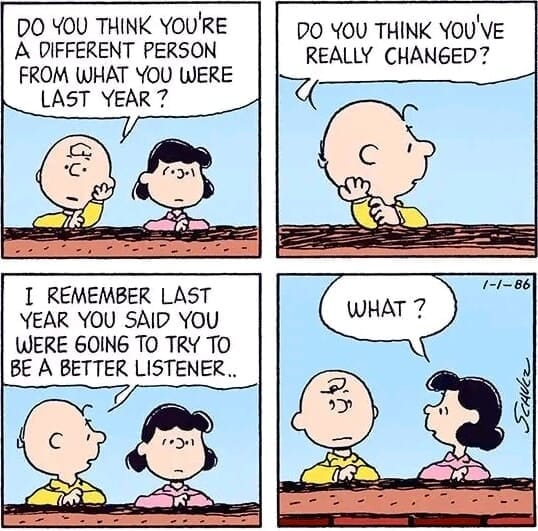
In project teams, we are naturally wired to be builders, fixers, and problem-solvers. Because of this, the moment a teammate (like a UX designer, a PM, or a fellow developer) starts describing a roadblock, our brains immediately start building a solution.
The exact second you start formulating the "fix" in your head, you stop actively listening to the person speaking. You might miss crucial context, edge cases, or the actual root of the problem. And this is the trap!
How to fix it: Consciously pause your internal "troubleshooting" engine until the person has completely finished speaking. Make your primary goal comprehension, not resolution.
"Most people do not listen with the intent to understand; they listen with the intent to reply."
— Dr. Stephen R. Covey (Author of The 7 Habits of Highly Effective People)
🤲You Can Make a Difference
Tech Fleet is a volunteer-run nonprofit with a mission to develop people-first leadership and empowered teams across the world. We depend on community support. Please contribute here, and share with others you know who might support our work!
How did we do?
We'd love your feedback on our newsletter! Hit "Reply" and tell us how we did!